DORA Compliance Checklist

Download the Object First DORA checklist to assess your readiness and support ongoing compliance.

Cyberattacks against financial organisations are intensifying. The European Union has responded with one of the most significant regulatory frameworks in the sector's history: the Digital Operational Resilience Act, or DORA, which has been in force since January 2025.  

Organisations across the EU financial sector must now take action to meet its requirements and avoid regulatory, financial, and reputational risks. These requirements include securely segmented backups and tested recovery plans.  

The Object First DORA checklist is designed to help you prepare for the regulatory framework, navigate the compliance process, and defend your operations against cyberthreats.
Checklist guide cover titled 'Getting NIS2 Ready: Your 7-Step Checklist'

What Is the Digital Operational Resilience Act (DORA)?

The Digital Operational Resilience Act is EU Regulation 2022/2554, adopted on 14 December 2022 as part of the EU's broader Digital Finance Package [1]. 

Its purpose is to ensure that the European financial sector can withstand, respond to, and recover from severe Information and Communication Technology (ICT) disruptions, including cyberattacks, system failures, and third-party service outages. 

DORA entered into force on 16 January 2023 and became fully applicable on 17 January 2025, so financial entities across the EU are expected to be compliant now. 

DORA vs. NIS2: What Changes for Financial Entities?

Unlike the Network and Information Security Directive (NIS2), which requires transposition into national law, DORA is a regulation that applies directly across all EU Member States, setting a single, harmonised standard. DORA constitutes lex specialis to NIS2 [2]. This legal principle means that, for financial entities, the specific law (DORA) prevails over the general law (NIS2). 

If your organisation falls under the scope of DORA, you do not need to comply with NIS2 for cybersecurity risk management or incident reporting, because DORA's requirements are at least equivalent. For organisations outside DORA's scope but covered by NIS2, the NIS2 compliance checklist sets out what Article 21 requires.

Who Needs to Comply with DORA?

DORA applies to 20 types of financial entities listed in Article 2, and to the ICT third-party service providers on which they rely. 

  • Banking and Payments
    • Credit institutions 

    • Payment institutions 

    • Electronic money institutions 

    • Account information service providers 

  • Capital Markets
    • Trading venues 

    • Investment firms 

    • Trade repositories 

    • Central counterparties (CCPs) 

    • Central securities depositories 

  • Asset Management
    • Alternative investment fund managers 

    • UCITS (Undertakings for the Collective Investment in Transferable Securities) management companies 

  • Insurance and Pensions
    • Insurance and reinsurance undertakings 

    • Insurance intermediaries 

    • Institutions for occupational retirement provision 

  • Other Regulated Entities
    • Credit rating agencies 

    • Securitisation repositories 

    • Administrators of critical benchmarks 

    • Crypto-asset service providers and issuers of asset-referenced tokens 

    • Crowdfunding service providers 

    • Data reporting service providers 

Third-Party ICT Service Providers 

DORA extends its reach beyond financial entities themselves, acknowledging that a firm's resilience is only as strong as the vendors it relies on. As a result, managed service providers (MSPs), cloud platforms, and software vendors also come under closer scrutiny. 

Under Article 30, every ICT contract must state where data is processed and oblige the provider to cooperate with competent authorities [1]. Contracts that support critical or important functions must go further, with full audit rights for the financial entity and its regulators, tested business contingency plans, and exit strategies. 

For the most vital suppliers, the regulation introduces a direct oversight framework, with the European Supervisory Authorities (ESAs) acting as Lead Overseers. On 18 November 2025, the ESAs published the first list of designated critical ICT third-party providers [3].  

[4] European Commission. "Commission Delegated Regulation (EU) 2025/301 supplementing Regulation (EU) 2022/2554 with regard to the content and time limits for the initial notification of, and intermediate and final report on, major ICT-related incidents," Article 5. Official Journal of the European Union, 2025. https://eur-lex.europa.eu/eli/reg_del/2025/301/oj

DORA Requirements: The Five Pillars

DORA groups its requirements into five pillars, and every item on this DORA requirements checklist belongs to one of them. 

1. ICT risk management:

Financial entities must establish a comprehensive, documented ICT risk management framework addressing the full lifecycle of ICT risk. The management body bears ultimate responsibility for approving and overseeing this framework.

2. ICT-related incident reporting:

Financial entities must classify ICT-related incidents by severity and report major ones to their competent authority in three stages [4]. The initial notification is due within four hours of classification (and no later than 24 hours after becoming aware of the incident), the intermediate report within 72 hours, and the final root-cause report one month after that.

3. Digital operational resilience testing:

Entities must implement testing programmes proportionate to their size and risk profile, ranging from basic vulnerability assessments to advanced threat-led penetration testing (TLPT). Entities identified by their competent authority must carry out TLPT at least every three years.

4. ICT third-party risk management:

Financial entities must maintain a detailed Register of Information that covers all ICT vendor contracts and terms. Before signing a contract that supports a critical or important function, they must also assess whether the provider would be hard to replace or would concentrate too much reliance in one place.

5. Information sharing:

Financial entities are encouraged to exchange cyberthreat intelligence within trusted communities to collectively strengthen the sector's resilience. Participation is voluntary, but entities that join an information-sharing arrangement must notify their competent authority.

Download the DORA Compliance Checklist and Evaluate Your Readiness

Use our DORA Compliance Checklist to see where your organisation stands against each of DORA's five pillars:

Checklist guide cover titled 'Getting NIS2 Ready: Your 7-Step Checklist'

The Backup Layer of Your DORA Compliance Checklist 

Recovery is one of the hardest parts of DORA to prove. Regulators expect evidence that data can be restored on time, which makes the choice of backup storage for financial services data part of the compliance strategy. 

  • Ransomware attacks often target backups. Immutable backups, which cannot be altered or deleted during a defined retention period, are an important part of meeting Article 12. However, some systems that claim to offer immutable backups have hidden exceptions, such as admin overrides. 

    Absolute Immutability means that even the most privileged admin or attacker with access to backup storage cannot modify or delete data. This level of protection can only be achieved using a backup storage system that is Secure by Design, with Zero Access to perform destructive actions, and that Zero Access must be verified through third-party testing. 

The DORA Compliance Checklist to Audit Your Resilience

Our DORA compliance checklist turns the regulation into 16 concrete actions across the five pillars, from defining impact tolerance to building a Register of Information. 

It closes with three backup measures that support DORA's recovery requirements, so you can check whether your recovery data would survive an attack.

Checklist guide cover titled 'Getting NIS2 Ready: Your 7-Step Checklist'

How Object First Supports DORA Compliance

To support the requirements under Article 12 of DORA, backup storage must be tamper-proof, tested, and quickly recoverable. When—not if—a breach occurs and your business, reputation, and career are on the line, backup storage with Absolute Immutability is your ultimate ransomware defence. 

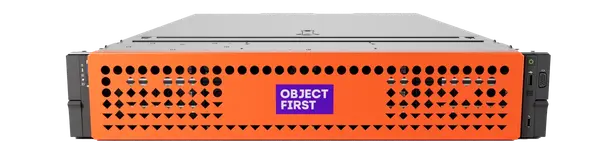
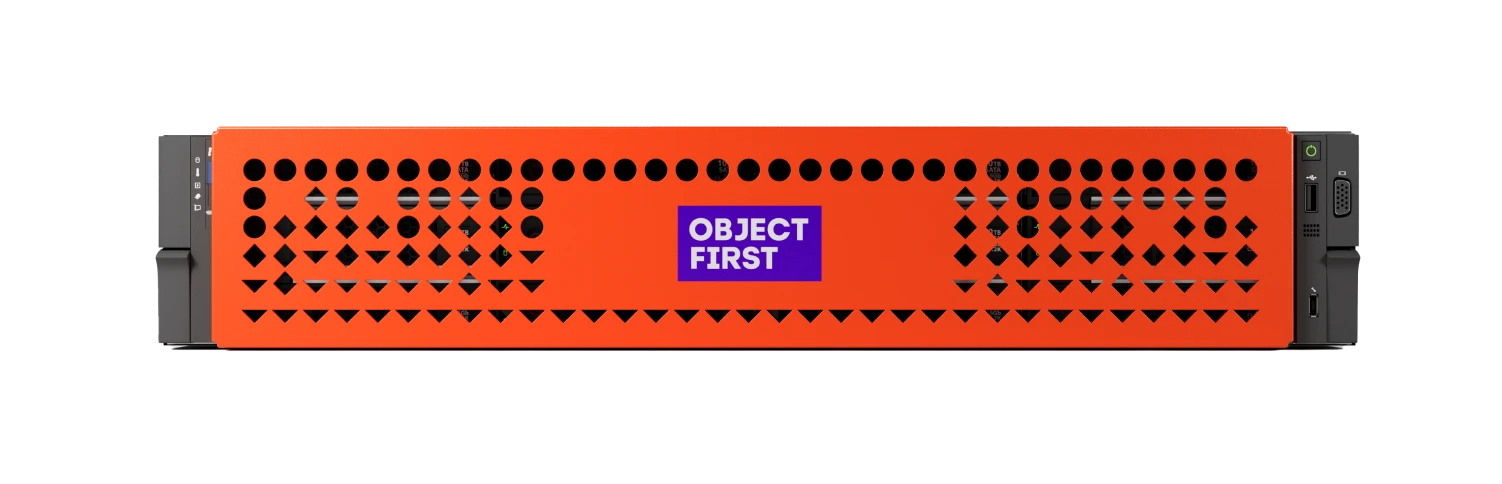
Ransomware-proof with Absolute Immutability, Object First on-premises backup storage for Veeam takes the risk out of data recovery, so you're always Simply Resilient.

FAQ

Does DORA Compliance Vary Across Different Financial Institutions? 

Yes. The five pillars apply to every financial entity, but DORA's proportionality principle (Article 4) scales them to each firm's size, risk profile, and services, while Article 16 lets smaller firms, such as small and non-interconnected investment firms and small occupational pension funds, use a simplified framework. For insurance companies, small insurers exempt under Solvency II and insurance intermediaries that are small or medium-sized enterprises fall outside DORA, while all other insurers must meet the same five pillars. 

What Does DORA Mean for Cybersecurity Teams? 

DORA makes ICT risk a regulated duty for which the management body bears ultimate responsibility, and it extends security teams' work from protection and detection to reporting major incidents and testing resilience. That is why restore tests belong on any DORA compliance checklist for cybersecurity teams: proving the business can recover is now part of the job. 

What Do DORA and NIS2 Require for Backup Isolation and Recovery Testing? 

DORA Article 12 requires financial entities to test their backup, restoration, and recovery procedures periodically and, when restoring backup data on their own systems, to use ICT systems that are physically and logically segregated from the source system. NIS2 Article 21 requires backup management and disaster recovery as part of business continuity, along with procedures to assess whether security measures are effective, although financial entities within DORA's scope follow DORA instead. 

Does DORA Apply in the UK? 

DORA is EU law, so it does not apply directly to firms authorised only in the UK, which instead follow the operational resilience rules of the Prudential Regulation Authority (PRA) and the Financial Conduct Authority (FCA). It does apply to their EU-authorised entities, and UK ICT providers serving EU financial entities are subject to its requirements through their contracts. 

References 

[1] European Parliament and Council of the European Union. "Regulation (EU) 2022/2554 on digital operational resilience for the financial sector." Official Journal of the European Union, 2022. https://eur-lex.europa.eu/eli/reg/2022/2554/oj 

[2] European Parliament and Council of the European Union. "Directive (EU) 2022/2555 on measures for a high common level of cybersecurity across the Union (NIS2 Directive)," Article 4. Official Journal of the European Union, 2022. https://eur-lex.europa.eu/eli/dir/2022/2555/oj 

[3] European Insurance and Occupational Pensions Authority (EIOPA). "European Supervisory Authorities designate critical ICT third-party providers under the Digital Operational Resilience Act." 18 November 2025. https://www.eiopa.europa.eu/european-supervisory-authorities-designate-critical-ict-third-party-providers-under-digital-2025-11-18_en 

[4] European Commission. "Commission Delegated Regulation (EU) 2025/301 supplementing Regulation (EU) 2022/2554 with regard to the content and time limits for the initial notification of, and intermediate and final report on, major ICT-related incidents," Article 5. Official Journal of the European Union, 2025. https://eur-lex.europa.eu/eli/reg_del/2025/301/oj