Cyber Insurance-Ready Backup

Meet cyber insurance backup requirements with backup storage that no one can alter or delete—not even attackers holding your admin credentials. 

Request a Demo
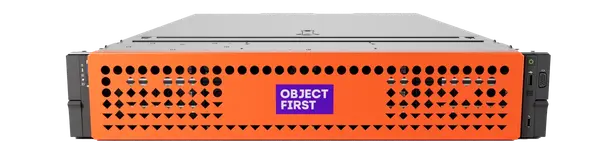
Object First unit - front panel4.9 of 5 rating by Gartner badge

Cyber insurance-ready backup is backup storage that satisfies the increasingly stringent technical requirements expected by insurers as a condition of coverage—including features like immutability. 

Backups face particular scrutiny from insurers because secure backups ultimately determine whether an organization can recover from a cyber-attack like ransomware. 

What Are Cyber Insurance Backup Requirements?

Cyber insurance backup requirements are shaped primarily by the features insurers commonly ask for in application questionnaires. These are filled out by organizations when they apply for a new policy, or at the renewal of an existing policy. The following six requirements are often assessed most closely:

  • Immutable backups

    Backup data must be protected against modification and deletion, including by administrators. Insurers ask whether at least one copy is immutable, because attackers target backup data to stop an organization recovering without paying a ransom.

  • Separate Backup Network

    Backup storage must be separated from the production network. Insurers check this so that an attacker who compromises production systems has no route to the backups needed to restore them.

  • Multi-Factor Authentication

    Access to the backup management interface must require multi-factor authentication. Without it, a single stolen password can give an attacker control of the backup environment and the ability to delete recovery points.

  • Encryption

    Backup data must be encrypted end to end. Ransomware groups now steal data as well as encrypting it, so insurers want assurance that any backup copy taken during an attack is unreadable without encryption keys.

  • Regular Restore Testing

    Backups must be restored on a regular schedule, with the results documented. Insurers want evidence that data can be recovered, and a backup job that reports success does not show that the data will restore.

  • Defined RTO and RPO

    Organizations must define and document recovery time and recovery point objectives (RTO/RPO) for critical systems. Underwriters use these targets to judge how quickly the business can resume operations after an attack, and how much data it stands to lose.

See the Controls Insurers Commonly Check 

Download our Cyber Insurance Checklist for a practical overview of the controls insurers expect, and how to implement them: 

Download the Checklist

How Do Insurers Verify Your Backups?

Insurers no longer take application answers on trust, and the same goes for cyber insurance backup verification. Organizations must be able to verify any controls they state in their application for the full life of a policy:

1. Underwriting:

The answers on your application are binding, and form the basis of your cover. Many insurers will verify your security posture directly: Corvus Insurance, for example, scans each applicant's corporate websites when it prepares a quote; other insurers use third-party technical assessments.

2. Continuous Monitoring:

The work continues once the policy is active. Organizaions should retain dated, tamper-proof restore-test results, access logs, proof that restores are clean, and actual recovery times measured against your RTO and RPO.

3. Claim:

When an incident takes place, insurers compare what is deployed against what was declared on application. If a declared control was missing or only partly in place, insurers may reduce payout, deny cyber insurance claims, or void the entire policy.

4. Renewal:

Policy renewals are assessed against current underwriting standards, not the standards in place at the time a policy was first written. As these standards are continuing to tighten, organizations should not expect that existing policies will be renewed automatically.

For a full picture of what insurers require and what it means for your organization, download our Cyber Insurance Guide. 

What Counts as an Immutable Backup for Cyber Insurance?

Corvus Insurance defines immutable backups as “a type of backup copy that is unchangeable and prevents any deletion or modifications.”  

The problem is, many backup storage vendors that claim to offer immutable backup storage only really provide a policy-based configuration that can be changed, bypassed, or disabled by administrators or attackers with elevated privileges.  

This is relevant because Omdia research reveals 4 out of 5 ransomware attacks target backup data. An attacker using stolen credentials to destroy backups is exactly the scenario cyber insurance exists to cover, and backups that fail in that scenario leave you unable to recover after a ransomware attack. 

The concept of Absolute Immutability was introduced to differentiate from weaker, policy-based protections. Absolute Immutability means that even the most privileged admin or attacker with access to backup storage cannot modify or delete data. This can only be achieved using a backup storage system that is “secure-by-design” with Zero Access to destructive actions, and this Zero Access must be verifiable with third party testing. 

This standard is supported by industry leaders: The same Omdia research also shows that 93% of technology leaders say Absolute Immutability is a critical backup storage requirement; a further 89% believe vendor claims of immutability need third-party validation before they can be trusted. 

While different insurers may have varying definitions of “immutability”, Absolute Immutability is the strongest evidence you can offer: not only is it independently verified, it proves you can ensure recovery when an attack happens.


How Object First Helps You Meet Cyber Insurance Backup Requirements

When—not if—ransomware strikes, your future depends on cyber resilience. Object First is your ultimate defense—backup storage with Absolute Immutability that’s purpose-built for Veeam.   

Based on Zero Trust, and third-party tested and verified, Object First requires no security expertise and scales with your business. When backup storage is this secure, simple, and powerful, you and your organization are Simply Resilient. 

Find out more about how Object First can help you meet cyber insurance backup requirements: 

Book a Demo

FAQ

Do Cyber Insurance Backup Requirements Differ By Industry?

Core backup questions are similar across insurers, but you should check the exact wording on your own application to be sure. Regulated industries such as financial services, healthcare, and the public sector may face additional record-retention and audit-requirements which affect how long backups must be kept and how changes are logged. Our guide to backup for financial services offers an example.

Can Better Backups Lower Your Cyber Insurance Premium?

Often, yes. Insurers price coverage based on the strength of your security controls, and backup is one of the controls they examine most closely. Strong backup controls that you can prove support better terms at application and renewal. Weak or unprovable controls can mean a higher premium, a lower coverage limit, or no quote at all.

Which Backup Architecture Passes Underwriting?

Ultimately, whether your application passes underwriting depends on your insurer’s specific requirements. That being said, an architecture built on the 3-2-1-1-0 backup rule covers the backup controls insurers most commonly ask about: three copies of data on two different media, one copy offsite, one copy immutable, and zero errors in restore testing. Underwriters also look for network segmentation between production and backup systems, and for separate credentials, protected by MFA, on the backup network. Together, these controls stop a compromise of production systems from reaching your backups.