
New

Healthcare Data

Backup Storage

Protect healthcare data with secure, on-premises backup storage

purpose-built for Veeam.

Request a Demo
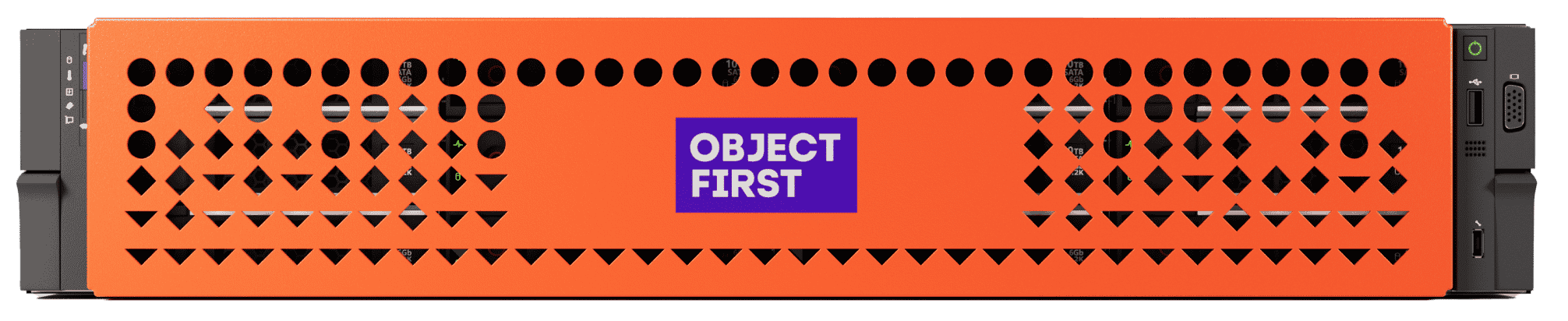
Object First unit - front panel4.9 of 5 rating by Gartner badge

Key Takeaways 

  • Healthcare organizations such as hospitals, dental clinics, diagnostic centers, and others must protect sensitive patient data against ransomware, data loss, and unauthorized access, with backup storage forming the foundation of any resilient data protection strategy.

  • On-premises, cloud, and hybrid backup options each offer distinct advantages—the right choice depends on an organization's performance needs, compliance requirements, and long-term cost considerations.

  • Key backup best practices include automated frequent backups, data separation, secure recovery processes, and a well-documented recovery plan to minimize downtime and protect patient care.

  • Purpose-built backup storage with immutability, fast recovery, and deep Veeam integration gives healthcare organizations the ransomware resilience and operational confidence to keep critical patient services running.   

  • Backup Storage for healthcare is a solution that enables healthcare providers to fully restore all data—including sensitive healthcare data—in the case of a ransomware attack or other data loss incident.  

Six healthcare sectors that need a backup storage solution 

Not all healthcare sectors are the same, but all of them handle sensitive data and are subject to strict compliance laws—making secure backup storage essential. Here are some examples:

  • Hospitals

    Backup storage for hospital data needs to protect large volumes of data from countless interconnected sources in many different formats—from patient records to DICOM (Digital Imaging and Communications in Medicine) files, MRI and CT data, X-ray images, and more. Hospital data output can exceed several terabytes per day, creating the need for consistent, enterprise-level backup storage that remains compliant with all relevant regional regulations.

  • Physicians

    Physicians (or general practitioners) may not produce or use as much data as hospitals, but they have a much higher patient-per-doctor ratio. Solid backup storage for medical records is essential to providing continuity of care for all individual patients.

  • Dental Practices

    Dentists work with particularly dense imaging data which requires large volumes of storage, especially as individual practices receive large volumes of patients. High rates of litigation in the sector also make storing clinical records, treatment notes, and consent forms particularly important.

  • Diagnostics and imaging

    For diagnostic centres generating terabytes of data daily—including complex DICOM files and the PACS (Picture Archiving and Communications Systems) needed to retrieve them—losing access to data even temporarily can bring clinical operations to a halt and impact on patient care.

  • Telehealth Providers

    Unlike clinics or hospitals, telehealth data can be generated and stored in any number of different locations—from patient devices to home offices, cloud platforms, and more. The distributed, multi-platform model is prone to significant storage gaps which may only become visible when data recovery is needed.

Protect healthcare data from ransomware

Secure, immutable backup storage built for clinical environments

Request a Demo

Key benefits of data backup storage for healthcare 

1. Protecting electronic medical records/PACS

Backups ensure electronic medical records and patient imaging data recoverable after failure or attack. When clinicians depend on instant access to diagnostic data, fast restoration protects both patient outcomes and the continuity of care.

2. HIPAA Audit Trails

Backups preserve historical data states, enabling organizations to reconstruct activity timelines, demonstrate compliance, and respond to regulatory audits or breach investigations with confidence.

3. WORM for ePHI

Write-Once-Read-Many (WORM) enabled backup locks electronic Protected Health Information (PHI) in a protected state for defined retention periods, ensuring records remain unaltered, legally defensible, and aligned with HIPAA data retention obligations.

4. Protection against ransomware

Backups with Absolute Immutability defend against ransomware by ensuring patient data and healthcare systems remain recoverable even if a ransomware attack breaches the network. Clean restore points mean organizations can recover quickly, avoiding ransom payments and prolonged operational disruption. 

On-premises vs. cloud: Which is the best backup solution for healthcare?

On-prem object storage is used as the offline copy in the 3-2-1-1-0 backup strategy. Veeam experts champion this approach as the best protection against modern security risks, including physical threats like floods, fires, and other events. See the key differences in the table below. 

Backup Storage
On-Premises
Cloud

Offline: As a physical device, object storage on-premises can be disconnected from the outside, reducing attack exposure to an absolute minimum—a critical consideration when protecting sensitive patient data.

Offsite: Adverse events within your perimeter do not affect the cloud. Cloud storage protects your data from local incidents, such as floods, fires, or earthquakes—ensuring patient records remain accessible even when facilities are compromised.

Self-sufficient: Object storage on-premises needs only one thing to work—electricity supply. And if you have your own power generator, nothing short of physical destruction stands between you and your data—keeping data like EMR and PACS systems recoverable when it matters most.

Vendor- and network-dependent: Simply put, you lose access to your data if your ISP or cloud vendor suffers an outage—a significant risk when clinicians depend on real-time access to patient records.

Highly performant: Physical proximity allows object storage on-premises to perform much better than the cloud, supporting the high-throughput demands of medical imaging and diagnostic workflows.

Capacity-optimized: Cost issues aside, cloud object storage has practically indefinite capacity—well suited to the growing volumes of ePHI, imaging archives, and long-term patient records healthcare organizations must retain.

Flexible and customizable: Many providers offer ample scope for customization, allowing healthcare IT teams to align storage configurations with specific compliance requirements.

Vendor-locked: Cloud storage comes with fixed options. While limiting, this might free mental resources to take care of other things besides storage maintenance.

Economical over time: The cost of on-prem object storage diminishes with time because the price per storage unit remains fixed while your capacity needs might fluctuate.

Low entry price with high long-term costs: The more data you send to the cloud, the more expensive it becomes in dollars per unit—a potential issue as patient data volumes continue to rise.

For many organizations, hybrid storage offers the best of both worlds, providing the security, performance, and cost-effectiveness of on-premises infrastructure with the ease of use of cloud-native object storage.

Best practices for data backup and recovery in healthcare 

Here are key elements that every healthcare organization should include in its data backup and recovery planning:

1. A robust recovery solution

The foundation of any data protection strategy is a reliable recovery solution tailored to the organization’s specific needs—be it on-premises, cloud-based, or a hybrid of both. For healthcare organizations managing EMR, PACS, and ePHI, choosing the right fit ensures recovery capabilities align with both operational demands and compliance requirements.

2. Frequent backups

Automated backups at appropriate intervals minimize the window of potential data loss. By removing the reliance on manual processes, healthcare organizations ensure critical patient data is consistently protected without gaps.

3. Data separation

Separation ensures that even if a cyberattack, fire, or flood compromises primary systems, only one copy is affected. The other remains isolated and intact, giving healthcare teams a clean, recoverable backup copy.

4. Secure recovery processes

Because recovery often happens under pressure and outside normal access patterns, strong authentication and authorisation controls are particularly important to prevent unauthorised access to sensitive patient data when it’s most vulnerable.

5. Well-defined recovery plan

A documented recovery plan ensures the whole organization knows exactly what to do when data loss occurs. For healthcare teams where system downtime can directly affect patient care, clear roles, responsibilities, and step-by-step procedures reduce response time and prevent costly mistakes when it matters most. 


North Country Healthcare achieves strong, fast, compliant backup storage with Object First

  • North Country Healthcare (NCH) is a nonprofit consortium comprising three critical access hospitals and a home health agency—providing locally accessible healthcare to the residents of northern New Hampshire.

Protecting healthcare data with Object First

When—not if—ransomware strikes, your future depends on cyber resilience. Object First is your ultimate defense—backup storage with Absolute Immutability that’s purpose-built for Veeam.  Based on Zero Trust and third-party tested and verified, Object First requires no security expertise and scales with your business. When backup storage is this secure, simple, and powerful, you and your organization are Simply Resilient.

For healthcare organizations, that means verifiable data integrity, fast recovery for critical data sources like EMR and PACS systems, and proven ransomware resilience to keep essential patient services running during cyberattacks.   

Book a Demo

FAQ

How to choose the perfect healthcare data storage solution?

Prioritize solutions that offer strong security, regulatory compliance, fast recovery, and seamless integration with existing backup software. Scalability and ease of management are equally important, particularly for organizations handling growing volumes of patient data across multiple locations.

What types of data should healthcare providers back up? 

Healthcare providers should back up any data critical to day-to-day clinical operations, including: electronic medical records (EMR), medical imaging and PACS data, ePHI, as well as billing and administrative records.

What is the best way to store and back up medical records?

Best practice combines on-premises backup for speed and control with offsite or cloud copies for disaster recovery, underpinned by strict access controls, encryption, and regular testing to ensure data remains recoverable and compliant.

Is Object First’s data backup storage solution HIPAA-compliant?

Object First is designed with HIPAA compliance in mind, offering backup storage with Absolute Immutability that prevents unauthorized modification or deletion of data alongside robust access controls and audit-ready data protection to support healthcare.